Six in a row Block
1,047 cc from six air-cooled cylinders, each 64.5 mm across with a 53.4 mm stroke. The short stroke is why it loves to rev past 9,000 rpm.
Six cylinders. Twenty-four valves. One dad who never stopped talking about it.
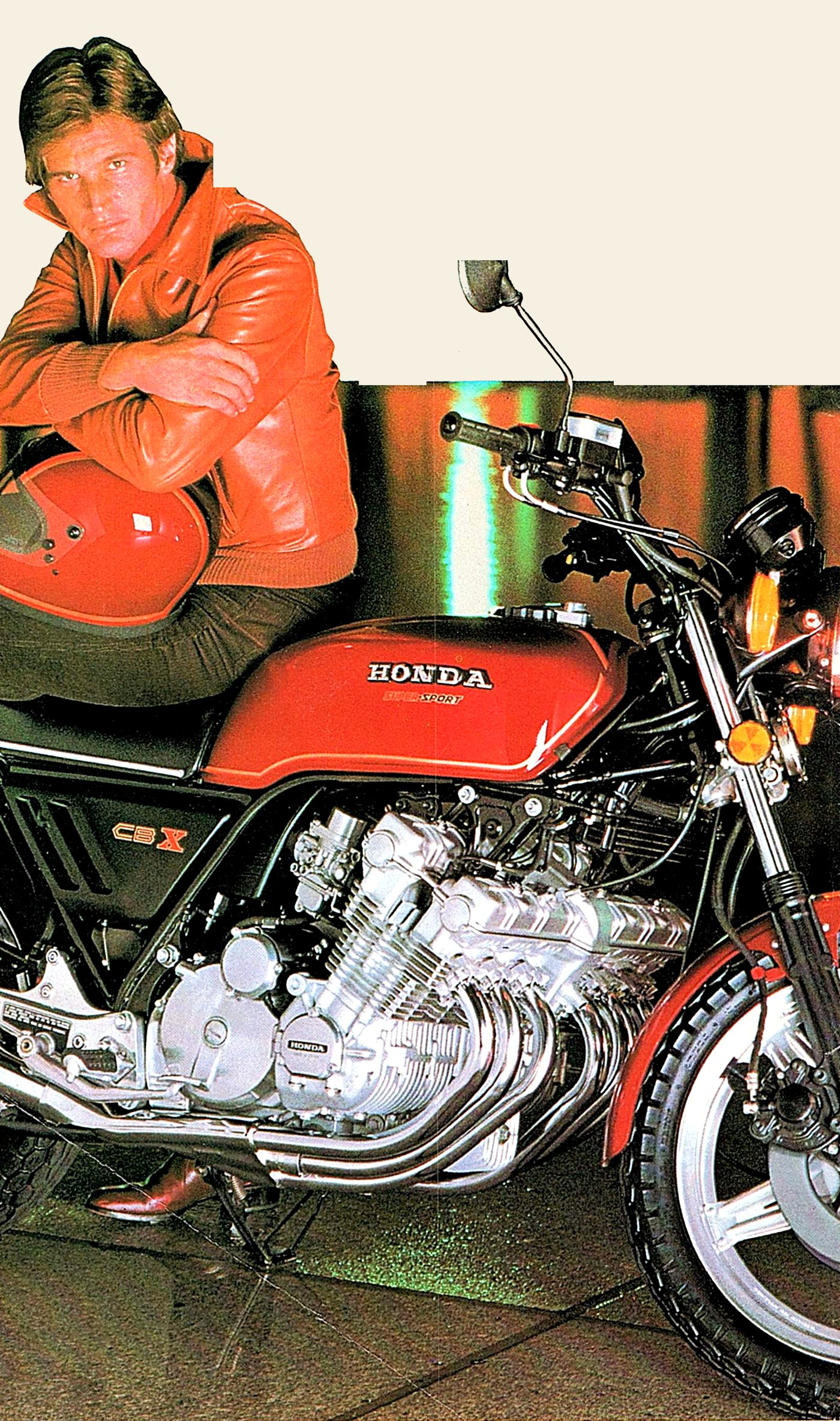
From the 1979 Honda lineup catalog
In 1979 most big motorcycles had four cylinders and called it plenty. Honda put six across the frame, gave each one its own carburetor and topped them with twin overhead cams working twenty-four valves. The catalog called the result a bike that “makes its own rules and defies comparison with its lesser brethren.”
The clever part is hidden. Honda moved the alternator and ignition onto a shaft behind the crankshaft and trimmed the outside flywheels, so a six-cylinder engine came out “nearly the same” width as the 750 Four. It looks massive, leans like a smaller bike and pulls like nothing else that was parked in a showroom that year.
Honda was clear about who it was for: “a bike for experienced riders who know perfection when they see it.” Dad saw it. He has been explaining it to the rest of us ever since.
The Honda CBX is here to stay
Anatomy of the six
1,047 cc from six air-cooled cylinders, each 64.5 mm across with a 53.4 mm stroke. The short stroke is why it loves to rev past 9,000 rpm.
Two overhead camshafts work four valves per cylinder. That is twenty-four valves under one long, polished cover.
One carburetor for every cylinder, ganged on a single throttle linkage. Getting all six in sync is a rite of passage for every CBX owner.
The alternator and the pointless inductive ignition ride on a shaft behind the crank, so the engine stays nearly as narrow as a 750 Four and still clears the corners.
Six chrome headers sweep forward and down, then gather into two mufflers. That sound is why people still turn around at the gas station.
Honda CBX · 1979 · Factory and press figures
| Engine | Air-cooled transverse inline six, DOHC, 4 valves per cylinder |
|---|---|
| Displacement | 1,047 cc (63.9 cu in) |
| Bore × stroke | 64.5 × 53.4 mm |
| Compression | 9.3 : 1 |
| Carburetion | Six Keihin CV carburetors |
| Ignition | Pointless inductive |
| Power | 105 hp (78 kW) at 9,000 rpm, claimed |
| Torque | 63 lb-ft (85 N·m) at 8,000 rpm, claimed |
| Transmission | 5-speed, chain final drive |
| Dry weight | 544 lb (247 kg) |
| Wheelbase | 58.9 in (1,495 mm) |
| Fuel tank | 5.3 US gal (20 L) |
| Top speed | 134–140 mph (216–225 km/h) |
| Quarter mile | 11.36 s at 117.95 mph (Cycle World) |
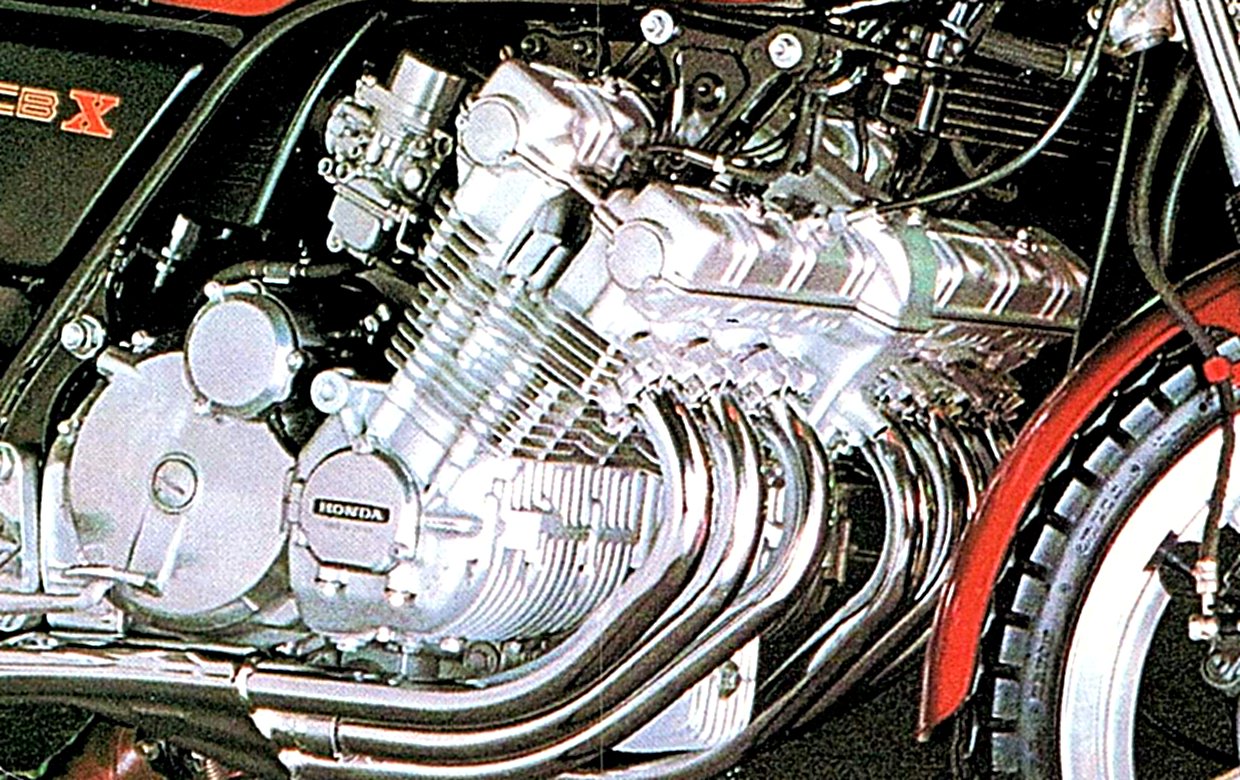
Power and torque are Honda's claimed figures. Quarter-mile time as reported by Cycle World. Top speed varies by test; magazines of the day recorded 134 to 140 mph.
Ignition
An inline six fires three times every turn of the crank, in the order 1, 5, 3, 6, 2, 4. That even rhythm is why a CBX sounds smooth at idle and like a turbine past 8,000 rpm. Start it, then hold the throttle. Sound on.
Engine off. The sound is synthesized in your browser.
Honda's RC166, a 250 cc six-cylinder Grand Prix racer, carries Mike Hailwood to the world championship. Engineer Shoichiro Irimajiri, who worked on Honda's racing sixes, would later lead the design of the CBX.
Cycle magazine tests a pre-production CBX at Orange County Raceway, Willow Springs and on the dyno. Honda shows the bike on the Isle of Man during TT week.
“The objective, to build the fastest production motorcycle for sale anywhere in the world, has been met.”Cook Neilson · Cycle · February 1978
The CBX opens Honda's 1979 lineup as its flagship. In testing it covers the quarter mile in 11.36 seconds at 117.95 mph, numbers no other production bike in the showroom could touch.
Honda turns the CBX into a sport-tourer with a fairing and saddlebags. Cycle Guide puts it head to head with BMW's R100RS in its May 1981 issue.
The final year of production. Survivors become the most collectible Japanese bikes of their era, and owners' clubs keep them running decades later.
Still parked, polished and running in Dad's head. Now it has a home here too.

Honda for 1979The catalog opened with the CBX at full lean against a painted rainbow. “When you're ready for a new motorcycle, your comparisons should begin, and end, right here.”
Drag or scroll
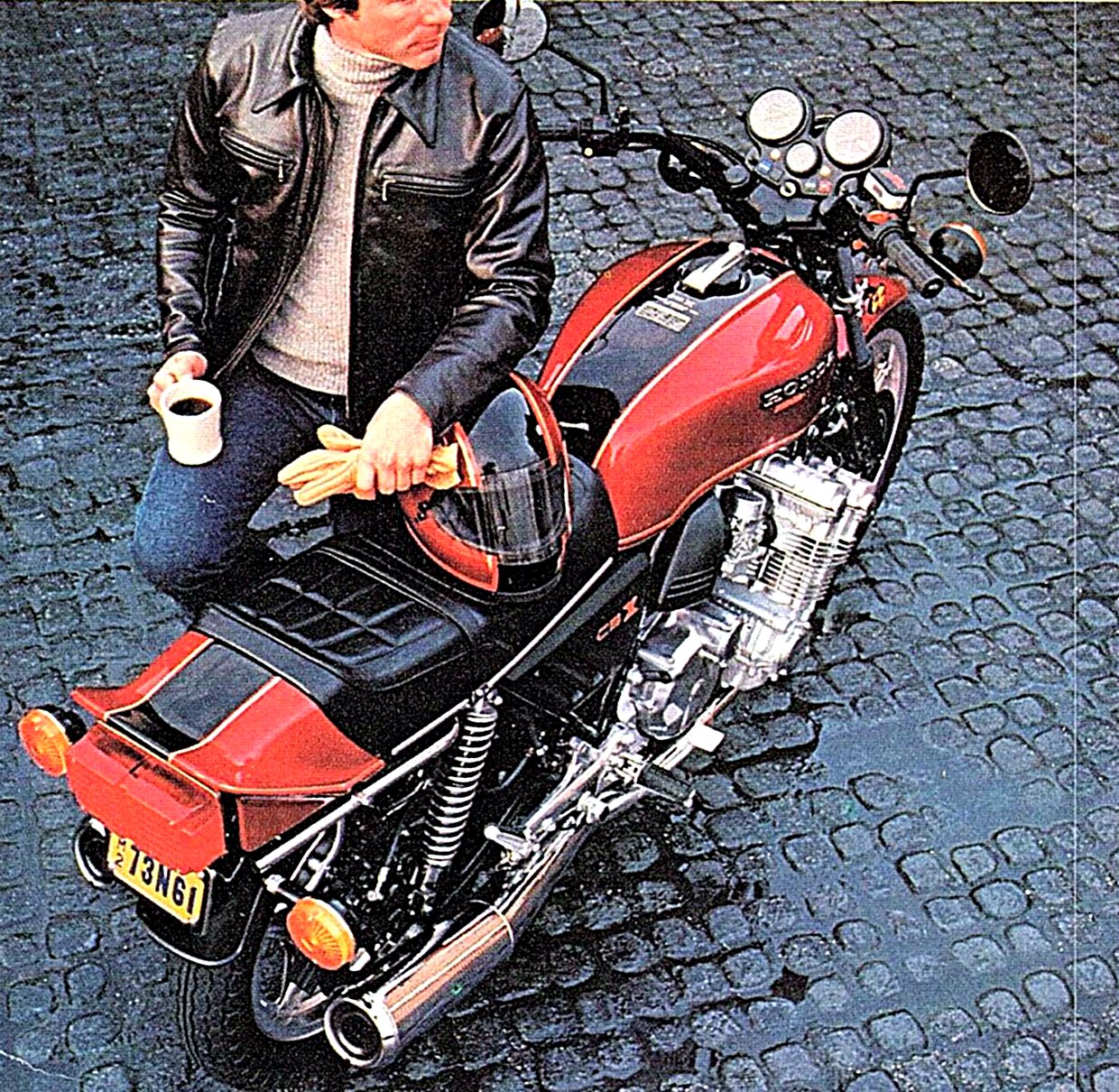
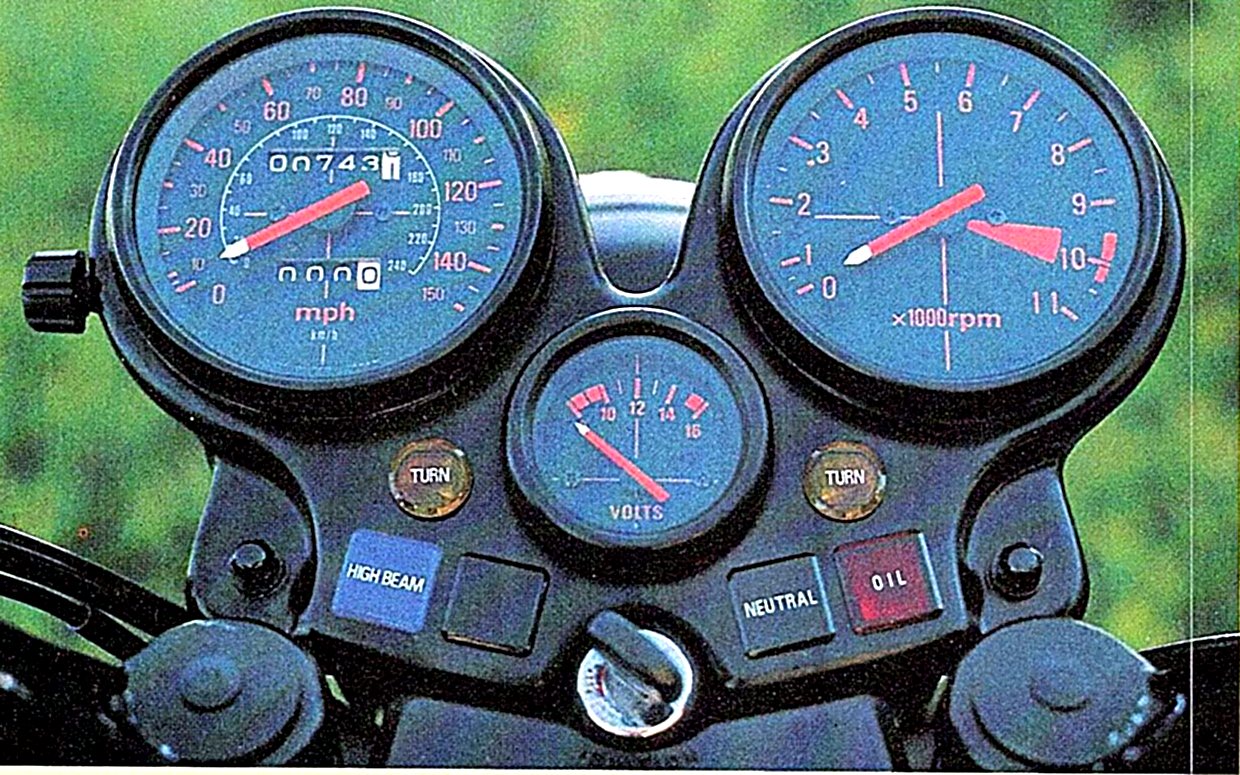
Pre najlepšieho otca na svete
Some dads collect stamps. Ours can tell you the bore and stroke of an engine built in 1979, and exactly why six cylinders beat four. He taught us that good machines are built with patience and kept with care, that you check the oil before you leave, and that the long way home is usually the right one.
This page is a small garage for the bike he loves. Every number in it is real, every photo comes from Honda's 1979 catalog, and every word is for him. Thank you for the rides, the stories, the grease under the fingernails and the patience. Ride safe, Dad. Love you! We are proud of you.
S láskou, tvoja rodinaWith love, your family
Six cylinders · One dad